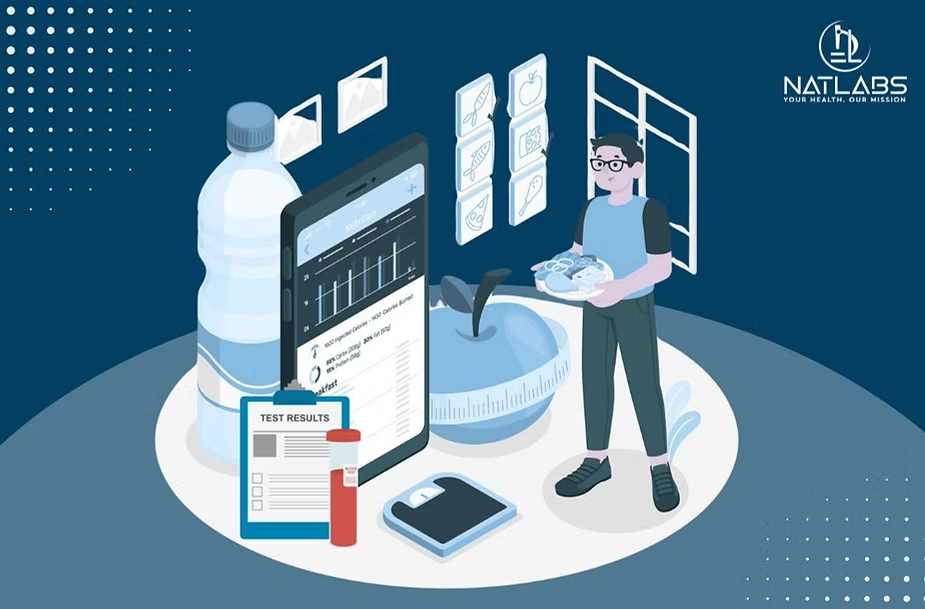

Your grandmother’s kitchen wisdom promised that a proper thali, dal, sabzi, roti, and rice would cover every nutritional need. She wasn’t entirely wrong. But between her generation and yours, something fundamental shifted. The pollution that blocks sunlight. The office chair replaced outdoor work. The processed snacks masquerading as convenience. The result? Millions of Indians are eating “well” by traditional standards, whilst their cells quietly starve for nutrients that blood tests alone can reveal.
This isn’t the malnutrition of empty plates. It’s the paradox of full stomachs and depleted bodies, a crisis hiding in plain sight across urban India’s middle class.
When Abundance Masks Absence
India’s nutritional landscape has transformed dramatically. Whilst caloric undernutrition declines, micronutrient deficiency, what researchers call “hidden hunger”, now affects over half of Indian adults and children. These aren’t dramatic deficiencies that announce themselves with obvious symptoms. They’re subtle shortfalls that accumulate over years, quietly undermining immunity, cognitive function, energy levels, and long-term health outcomes.
The tired professional blames stress. The student whose concentration wavers. The woman whose hair thins inexplicably. The child who falls ill repeatedly. Behind these common complaints often lie measurable nutrient gaps that remain undiagnosed because we’ve normalised feeling suboptimal.
Urbanisation accelerates this hidden crisis. Processed foods replace whole ingredients. Indoor lifestyles eliminate sun exposure. Convenience overwhelms nutrition. Even as plate sizes grow, nutrient density shrinks.
The Deficiencies Undermining Indian Health
Vitamin D: The Sunlight Paradox
In a country blessed with abundant sunshine, 70-90% of urban Indians test deficient for vitamin D. The explanation isn’t mysterious; pollution dims sunlight penetration, office jobs keep bodies indoors, sunscreen blocks synthesis, and cultural preferences for covered clothing reduce skin exposure even during outdoor moments.
What manifests as persistent body aches, frequent infections, low mood, or bone pain gets dismissed as normal fatigue or ageing. Meanwhile, inadequate vitamin D weakens immunity, accelerates osteoporosis risk, and compromises dozens of bodily processes that depend on this critical hormone-like nutrient.
Iron: The Female Tax
Over a third of Indian women and shocking numbers of children suffer from anaemia, predominantly caused by iron deficiency. Vegetarian diets centred on cereals with limited bioavailable iron, menstrual losses, gastrointestinal absorption problems, and inadequate dietary diversity create perfect conditions for deficiency.
Mild anaemia operates silently, perhaps slight tiredness, maybe pallor that makeup conceals. For students and professionals, inadequate iron translates to dulled concentration, reduced productivity, and slower illness recovery. The cognitive cost alone represents massive lost potential across India’s workforce and classrooms.
Vitamin B12: The Vegetarian Vulnerability
Found abundantly in animal products but virtually absent from plant foods, B12 deficiency affects an estimated 40% of urban Indians as vegetarianism expands without adequate supplementation strategies.
Early symptoms, tingling sensations, fatigue, memory lapses, and mood changes, are attributed to stress or ageing. Severe deficiency can mimic dementia or psychiatric conditions, particularly in elderly populations. Left unaddressed, B12 depletion causes irreversible neurological damage.
Folate: The Foundation Nutrient
Essential for cell repair, DNA synthesis, and brain function, folate deficiency now spans both rural and urban populations. Fast food dominance, polished rice consumption, and cereal-heavy diets stripped of green vegetables create widespread inadequacy.
Children with insufficient folate struggle academically. Adults face elevated cardiovascular risk and weakened immunity. Pregnant women risk serious birth defects in their offspring, a tragedy entirely preventable through adequate intake and supplementation.
Calcium: The Bone Debt
Despite India’s dairy tradition, surveys consistently show calcium intake falling far below recommended levels, especially among school-aged girls and elderly populations. The long-term invoice comes due due to increased fracture vulnerability, dental problems, and osteoporosis that transforms independent seniors into dependent patients.
Zinc and Magnesium: The Invisible Regulators
Both minerals govern immunity, mental health, and metabolic function. Refined carbohydrate dominance, minimal nut and seed consumption, and chronic stress create deficiencies that masquerade as other problems, “burnout,” persistent stress symptoms, slow wound healing, or troublesome skin conditions that resist treatment.
Why Deficiency Stays Hidden
Nutrient inadequacy rarely announces itself dramatically. The body adapts by functioning at reduced capacity, a survival mechanism that masks the problem whilst damage accumulates. Busy schedules, skipped meals, fast food reliance, minimal sun exposure, and cultural dietary restrictions compound gradually.
Most Indians trust that their traditional diet provides adequate nutrition. This confidence, whilst rooted in historical truth, ignores how radically food quality, lifestyle patterns, and environmental factors have changed. Only comprehensive laboratory testing reveals what lies beneath assumptions.
The Compounding Costs
Undetected deficiencies extract heavy tolls: weakened immunity leading to frequent illness, impaired childhood physical and mental development, elevated depression and anxiety risk, chronic disease progression, reduced workplace productivity, and eventually, expensive medical interventions for conditions that were preventable.
Low energy, irritability, persistent pain, recurring infections, these normalised complaints often signal nutrient gaps long before they feel “serious enough” for medical attention.
The NATLABS Advantage: Precision Reveals What Assumptions Hide
At NATLABS, our three decades of diagnostic excellence transform vague malaise into actionable intelligence. Our comprehensive micronutrient panels identify deficiencies before they become diseases:
Complete vitamin assessment, including serum vitamin D, B12, and folate levels measured against optimal ranges, not just deficiency thresholds.
Iron studies examining ferritin, serum iron, transferrin saturation, and complete blood counts that distinguish between different anaemia types.
Mineral profiling measures calcium, zinc, and magnesium levels that standard checkups typically ignore.
Contextualised interpretation that considers your specific dietary patterns, lifestyle factors, and health goals rather than generic reference ranges.
With NABL-accredited laboratory standards, free home sample collection within 30 minutes across Ludhiana, Jalandhar, and Jammu, and smart reports that translate complex biochemistry into clear guidance, NATLABS eliminates every barrier between suspicion and certainty.
From Diagnosis to Optimisation
Laboratory confirmation of specific deficiencies enables targeted intervention rather than guesswork supplementation:
Dietary modification emphasising nutrient-dense whole foods, pulses, eggs, dairy, dark leafy greens, nuts, seeds, and fortified options chosen strategically.
Intelligent supplementation dosed appropriately for your specific deficiencies under medical guidance, avoiding both inadequate correction and toxic excess.
Preparation optimisation combining iron-rich foods with vitamin C for enhanced absorption, timing tea and coffee away from iron-containing meals, and incorporating fermented foods that improve nutrient bioavailability.
Lifestyle integration, including outdoor exposure, regular movement, structured meal timing, and mindful eating that supports nutrient absorption.
Honouring Tradition with Modern Precision
Indian food traditions, seasonal vegetables, fermented preparations, diverse thalis, and strategic spice use have evolved over centuries to provide comprehensive nutrition. These patterns remain valuable. But modern life has disrupted them profoundly whilst simultaneously creating deficiency risks our ancestors never faced.
Trusting cultural wisdom whilst ignoring the validation that laboratory testing provides leaves hidden deficiencies unchecked, a dangerous gamble with your family’s long-term health.
Stop guessing. Start knowing. Book your comprehensive micronutrient screiening with NATLABS and discover what your body actually needs, not what tradition assumes it’s getting.